Rock Salt vs. Calcium Chloride: Choosing Ice Melt Wisely
Wondering if rock salt or calcium chloride is better for your driveway? Learn how each affects concrete, pet safety, and your budget before the next winter storm.
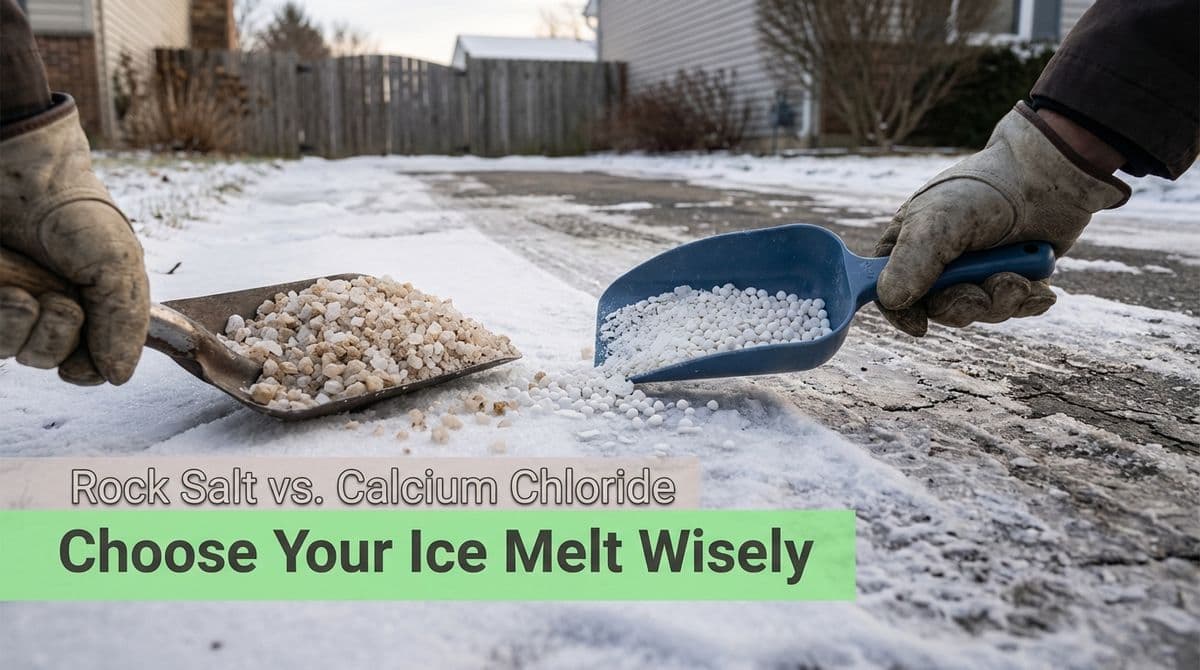
Rock Salt vs. Calcium Chloride: A Real Customer’s Dilemma
We recently got a call from a customer — let’s call her Sarah — who wanted to get on our snow removal list before a big storm weekend. As we went over the details of her service, we got to a question we hear all the time:
“What kind of salt do you use? I have pets and I don’t want to ruin my driveway.”
Just like with Sarah, we explained that we typically offer two options: traditional rock salt and calcium chloride. Rock salt is cheaper, but tougher on concrete and not very pet-friendly. Calcium chloride costs more, but it’s easier on surfaces and safer around pets when used properly. Sarah immediately said, “Let’s do the pet-friendly one.”
That quick decision actually hides a lot of good questions: How do these products really differ? Is the extra cost worth it? Will they damage your driveway? And what about your dog’s paws or the plants near your walk?
Let’s break down how to choose the right ice melt for your driveway based on three big concerns: concrete damage, pet safety, and cost.
Rock Salt 101: What Homeowners Should Know
When people say “salt,” they’re usually talking about rock salt, or sodium chloride. It’s the most common product you’ll see in big bags at hardware stores and stacked up in front of supermarkets before a storm.
Here’s what we told Sarah when we walked through the pros and cons.
Pros of Rock Salt
- Lower upfront cost: Rock salt is usually the cheapest option per bag and per square foot. If you have a long driveway and a tight budget, that’s appealing.
- Works fine in typical storms: It’s effective down to about 15–20°F. For many winter days, that’s good enough.
- Easy to find: Almost every store carries it, so if you’re grabbing something last-minute before a storm, rock salt is usually what you’ll see.
Cons of Rock Salt
- Hard on concrete: Rock salt can speed up the freeze–thaw damage that leads to pitting, scaling, and cracking. On newer concrete (less than a year old), this can be especially risky.
- Not pet-friendly: It can irritate paws, cause redness or cracking, and if pets lick it off, it can upset their stomach or worse.
- Corrosive: It’s tough on metal — think garage doors, vehicles, and metal railings.
- Limited low-temp performance: When temperatures drop well below 15°F, rock salt loses effectiveness and can leave you with refreezing slush.
In short, rock salt is budget-friendly but comes with trade-offs, especially if you’re worried about your concrete or you have pets and kids around.
Calcium Chloride: Why We Often Recommend It
With Sarah, once we mentioned that calcium chloride is more pet-friendly and better for concrete, she didn’t hesitate to choose it. That’s usually where we land when homeowners ask what we’d use on our own driveways.
Pros of Calcium Chloride
- Better for concrete (when used correctly): No deicer is 100% harmless, but calcium chloride is generally less damaging to concrete than rock salt, especially when applied at the proper rate.
- More pet-friendly: Many products based on calcium chloride are labeled as pet-safe or pet-friendly. They’re typically less irritating to paws than plain rock salt.
- Works in colder temps: Calcium chloride can work down to about -25°F, which means less refreezing and better traction during cold snaps.
- Faster-acting: It tends to start melting ice more quickly, so walking and driving areas become safer sooner.
Cons of Calcium Chloride
- Higher cost: This is the big one. The product itself is more expensive, and you’ll usually see that reflected in service pricing.
- Still needs careful use: Over-application or misuse of any deicer can damage surfaces, lawns, and plants. More isn’t better.
For homeowners like Sarah who say, “I’d rather spend a bit more and protect my pets and driveway,” calcium chloride is usually the right choice.
Concrete Damage: How to Protect Your Driveway
One of Sarah’s quiet worries — and a big concern for many homeowners — is waking up in spring to a driveway that looks worse than before winter started.
Here are some simple ways to protect your concrete, no matter which product you choose:
- Avoid deicer on new concrete: If your driveway is less than a year old, try to rely mainly on sand or traction grit instead of chemical deicers.
- Use the right amount: Follow the instructions on the bag. Applying a thick layer doesn’t melt faster; it just increases the risk of damage and tracking product into your house.
- Shovel first, then melt: Physically remove as much snow as possible before applying deicer. You’ll use less product and reduce the exposure of your concrete.
- Rinse in spring: Once winter is over, give your driveway a good rinse to remove leftover salt and residue.
Pet Safety: What We Tell Pet Owners
When Sarah heard that rock salt is “not pet-friendly,” that was a deal-breaker for her. If you have dogs or outdoor cats, here are a few practical tips:
- Choose pet-labeled products: Look for ice melts marked pet-safe or pet-friendly, often based on calcium chloride or blended formulas.
- Wipe paws after walks: Keep a towel by the door and quickly wipe paws when pets come in. This helps prevent irritation and ingestion.
- Watch for red or cracked pads: If you see irritation, contact your vet and consider booties or switching products.
- Store product securely: Keep bags sealed and out of reach so curious pets can’t chew them.
Cost vs. Peace of Mind: How to Decide
When we price out snow removal, we do what we described to Sarah: measure the driveway via satellite, run it through our pricing equation, and then factor in the type of ice melt. Calcium chloride costs more — there’s no way around that — but here’s how we suggest thinking about it:
- Short-term savings vs. long-term repairs: Rock salt is cheaper now, but concrete repairs or replacement later can be far more expensive.
- Value of safety: Better performance at lower temperatures and faster melting can mean fewer slips and falls for your family and visitors.
- Peace of mind with pets: If your pets are part of the family (like they are for most of our customers), that alone can justify the upgrade.
In our own yards and on most residential driveways where pets and kids are around, we lean toward calcium chloride or a pet-friendly blend, just like we recommended to Sarah.
Still Unsure? Here’s a Simple Rule of Thumb
If you’re standing in the store debating which bag to grab, or you’re choosing between service options, here’s the guideline we often share:
- Use calcium chloride (or pet-friendly blends) if you have pets, kids, decorative concrete, or a history of driveway damage.
- Use rock salt carefully only if budget is the top priority and your concrete is older, in decent shape, and you’re willing to accept some extra wear.
When in doubt, ask your snow removal company — or that handy neighbor who’s always out there before the storm hits — what they’d use on their own driveway. Around here, that’s usually the same answer we gave Sarah: go with the pet-friendly option and protect your concrete.