Residential Snow Removal Pricing & Snow Trigger Guide
Confused about residential snow removal pricing? Learn how zero-tolerance vs. 2–4 inch triggers and per-storm tiers work so you know exactly what to expect before the next storm.
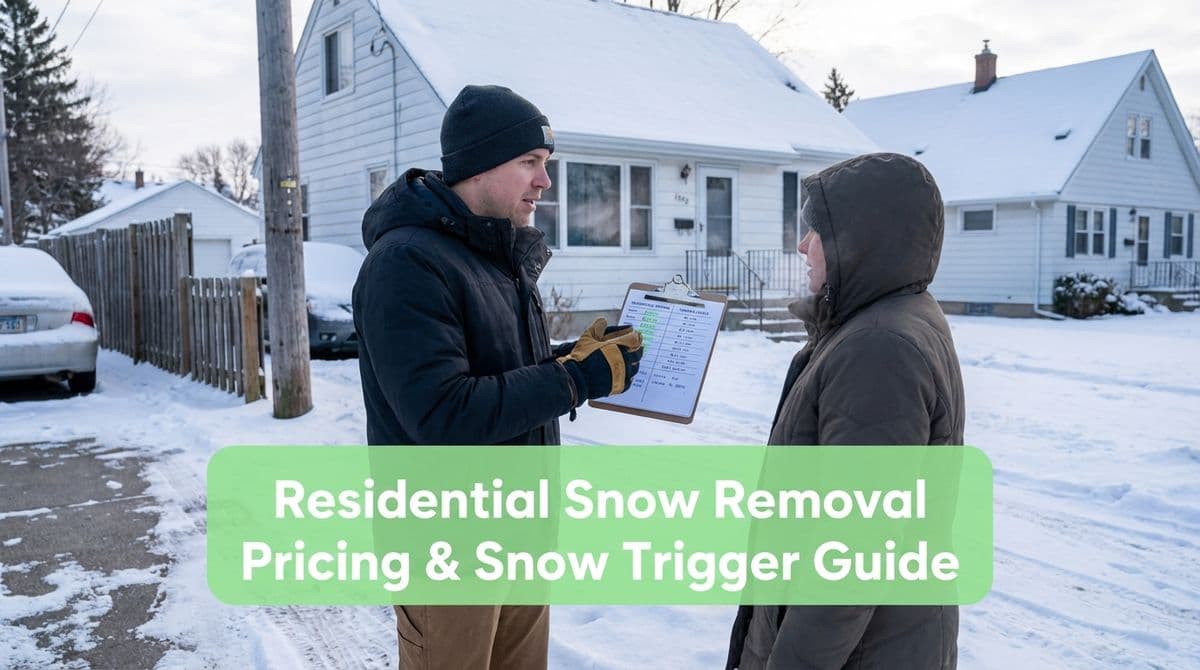
How One Homeowner’s Snow Question Turned Into a Great Lesson
We recently got a call from a homeowner — let’s call her Sarah — who asked a question we hear a lot in winter:
“Do you do snow removal for houses, and how do you charge? Is it by the inch or a flat fee?”
Sarah had a shared driveway, two front walkways, and some steps that needed to be cleared. She also wanted to know when we would actually come out: only in big storms, or every time it snowed a little?
Her questions are exactly what most homeowners wonder but don’t always ask. So we’ll walk you through what we explained to her about residential snow removal pricing, triggers, and what you should expect from a good snow contract.
Zero-Tolerance vs. 2–4 Inch Triggers: When We Come Out
One of the first things we asked Sarah was about her snow threshold — the amount of snow that has to fall before we get the green light to come out.
There are a few common options:
- Zero-tolerance: We come out any time there’s measurable snow or ice. This is best if you have mobility concerns, medical needs, or simply want clear pavement all the time.
- 2–4 inch trigger: We come once snow reaches around 2–4 inches. This is one of the most popular options for residential driveways.
- 4–6 inch trigger (or higher): We only come out in bigger storms. This can save money, but you’ll have more snow sitting for longer.
For Sarah, we recommended a 4-inch trigger. She didn’t need a perfectly bare driveway for every dusting, but she did want to make sure the driveway, parking spot, front doors, and steps were cleared after any significant storm.
How Per-Storm, Per-Interval Pricing Works
Sarah’s next big question was how we charge: by the inch, per push, or a flat fee. In her case, we used a per-storm, tiered pricing model — something like:
- 0–2 inches: Base rate (often used with zero-tolerance accounts)
- 2–4 inches: Slightly higher rate
- 4–6 inches: Higher rate again
- 6+ inches: Either a top tier or a custom “blizzard” rate
Instead of charging “per inch” for every tiny change, we group snowfalls into 2-inch intervals. So, for example, a 3-inch storm would fall into the 2–4 inch tier; a 5-inch storm would fall into the 4–6 inch tier.
This keeps pricing simple and predictable for both sides. You know what you’ll pay based on how much snow actually lands, and we know how much time and equipment we’ll need to clear your property safely.
How We Build a Quote: Driveway Size, Shared Spaces, and Walkways
On the call, Sarah offered to send us pictures of the driveway. We appreciated that, but we also explained that we typically start with Google Earth and aerial measurements.
Here’s what we look at before we send a quote:
- Square footage: The size of the driveway, walkways, and parking areas.
- Number of entry points: Front door, side door, steps, and any paths that must be cleared.
- Shared driveways: Whether you’re sharing with a neighbor and whether we’re doing the whole shared surface.
- Obstacles: Retaining walls, tight turns, mailboxes, parked cars, or slopes.
In Sarah’s case, it was a shared driveway with two front patios and steps. We made sure to include the entire driveway, shared parking spot, and both front entry areas in the estimate so there were no surprises for either homeowner.
Typical Residential Price Ranges (So You Know What’s Normal)
Exact numbers will vary by region and storm frequency, but many homeowners ask what’s “normal” before they sign anything. Based on what we see in our area, here are rough ranges per storm that many people can expect:
- Small single-car driveway + short walkway: Often in the low range for each 2–4 inch storm tier.
- Standard two-car driveway + front walk/steps: Typically in the mid-range per storm, depending on slope and obstacles.
- Long or shared driveway + multiple entrances: Usually on the higher end, especially if snow has to be carried or pushed a distance.
What matters most is that your contractor can explain why your price is what it is: square footage, number of passes with the plow, shoveling vs. snow blower, and time on site. If the numbers feel random and no one can walk you through the logic, that’s a red flag.
What Your Snow Contract Should Clearly Spell Out
After we gathered details from Sarah, we told her we’d email a written contract before doing any work. That way she could read everything, ask questions, and sign only if she was comfortable.
A solid residential snow contract should clearly list:
- Exactly what’s being serviced: Driveway, parking spots, walkways, steps, front doors, side doors, etc.
- Your trigger depth: Zero-tolerance, 2–4 inches, 4–6 inches, or another amount.
- How pricing works: Per storm tiers, seasonal rate, or per push.
- Service timing: For example, “within 24 hours after snow ends,” or multiple visits in larger storms.
- How to reach us: Phone numbers or email for urgent needs (like getting out for work or a medical appointment).
For Sarah, we committed to service within 24 hours after the snowfall ends, with the note that in a big storm we might come out twice — once mid-storm, once after it ends — to keep things manageable.
Common Snow Removal Contract Mistakes to Avoid
We see a few issues crop up every winter when homeowners sign in a hurry. To protect yourself, try to avoid these common mistakes:
- No defined trigger: If the contract doesn’t say when the crew comes, you may be stuck with more snow than you expected on the ground.
- Vague service areas: “Driveway” can mean different things. Make sure steps, walkways, and shared portions are spelled out.
- Unclear pricing in bigger storms: Ask what happens at 8, 10, or 12 inches. Do tiers continue, or is there a special rate?
- No timeline for service: “We’ll get there when we can” isn’t very reassuring. You should at least know the typical window, like within 12–24 hours.
When everything is in writing, you’re not relying on memory during a late-night snowstorm. Both you and your contractor know exactly what to expect.
What You Should Expect from a Professional Snow Crew
By the end of our conversation with Sarah, we had her information, confirmed her shared driveway setup, chose a 4-inch trigger, and explained our per-storm, 2-inch interval pricing. Then we emailed her a contract so she could look it over and ask anything before signing.
That’s what you should expect from any professional snow removal company:
- Clear questions about your property and needs
- Transparent pricing based on measurable factors
- Defined snow triggers and service timelines
- A written agreement you can review before the first flake falls
If you’re unsure which trigger or pricing setup makes sense for your home, reach out. We’re always happy to talk through your driveway, walkways, and budget the same way we did with Sarah, so when the next storm hits, you’re not out there guessing with a shovel in your hand.