Pet-Safe Lawn Care for Dog Owners: Our Safety-First Guide
Learn how we build pet-safe lawn care plans so your grass stays lush while your dogs stay healthy, from fertilizer choices to post-treatment safety steps.
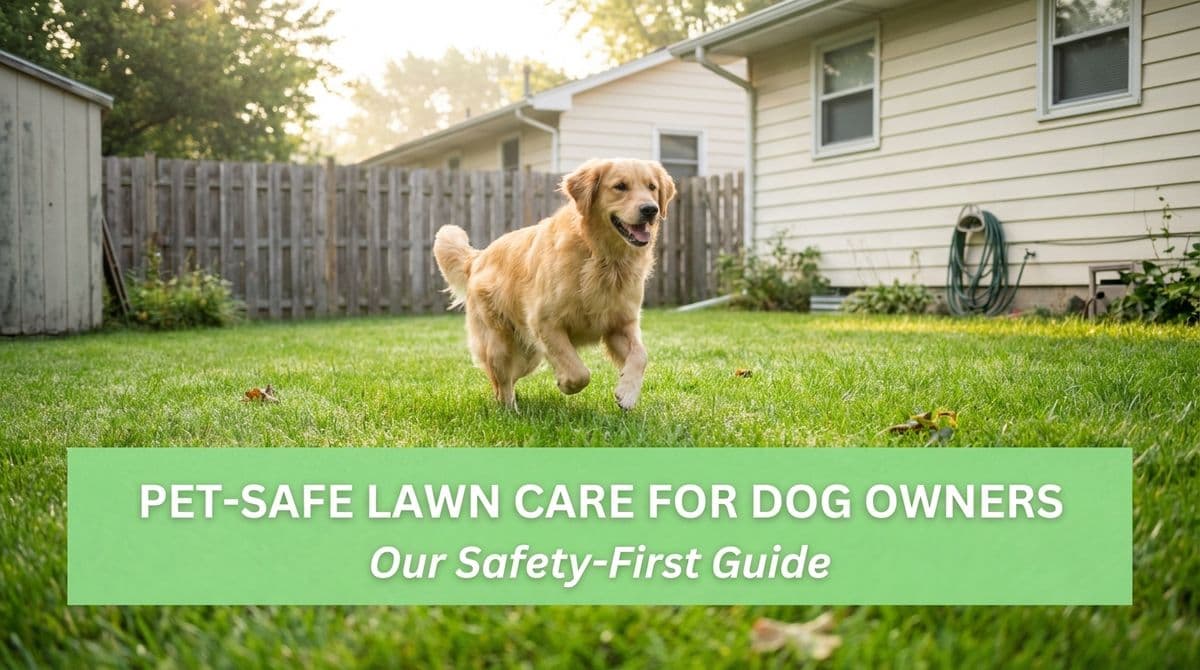
A Lawn Your Dog Can Enjoy Safely
We recently got a call from a homeowner — let's call him Mark — who was looking for regular lawn service, some spring clean-up, and tree trimming. As we talked through mowing and fertilizing, he paused and asked a question we hear a lot:
“We’ve got a dog that’s on the lawn all the time… is your fertilizer pet friendly?”
That one simple question turned our conversation from basic lawn care into a deeper talk about how to keep grass healthy and keep pets safe. If you’ve got dogs that love to roll in the grass, snack on it, or just lounge outside, this is exactly what we walked Mark through.
What “Pet-Safe” Lawn Care Really Means
When Mark asked if our fertilizer was pet friendly, he was really asking two things:
- Is it safe if my dog walks and plays on the lawn?
- What if my dog chews the grass or licks their paws afterward?
Those are the right questions. “Pet safe” isn’t just a label on a bag — it’s about how products are used, how the lawn is treated, and what rules you follow afterward.
Here’s how we explained it to him, and how we approach every lawn with pets in mind.
Choosing Dog-Friendly Fertilizers and Treatments
For lawns with pets, we start by adjusting the products we use rather than using the same program for every yard. When we walked through options with Mark, we focused on three main categories:
1. Fertilizers
Safer choices we like:
- Slow-release granular fertilizers that stay on the soil surface and don’t easily stick to paws once watered in.
- Low-phosphorus or phosphorus-free blends to reduce runoff risk if your dog loves to splash in puddles.
- Organic or organic-based formulations when possible, made from natural sources rather than strictly synthetic salts.
We avoid quick-release, high-salt products on pet-heavy lawns because they’re more likely to cause irritation if a curious dog mouths the grass before everything has settled and been watered in.
2. Weed Control
Weed control is where we’re extra careful. With Mark, we talked through options like:
- Targeted spot-spraying weeds instead of blanket-spraying the entire yard.
- Using pre-emergent products at specific times of year so we can limit how often post-emergent herbicides are needed.
- Hand-pulling certain broadleaf weeds in smaller lawns or high-traffic dog areas.
We always follow label directions for re-entry times, which tell you when pets (and people) can safely go back on the grass.
3. Insect and Grub Control
If you’ve ever seen a dog eat a grub or dig for critters, you know why we’re cautious here:
- We use targeted grub controls only when there’s a real problem, not automatically every season.
- We prefer products with lower toxicity ratings and apply them at times when we can strictly control dog access.
The safest pesticide is the one you don’t need, so we also recommend healthy mowing heights and proper watering to make the turf more naturally resistant to pests.
How We Customize Lawn Plans for Homes With Dogs
As Mark and I talked, it became clear their dog wasn’t just a visitor to the yard — he basically lives out there. That changes how we plan the work.
Here’s how we typically adjust when there are one or more dogs in the home:
- Mapping dog paths and play zones: We ask where the dog usually runs, plays fetch, or likes to lie down. Those areas may get lighter or more targeted treatments.
- Timing around your routine: If you usually let the dog out early morning and evening, we’ll aim to treat mid-day when they’re inside, or work with you on a specific schedule.
- Extra focus on worn spots: High-traffic dog areas get compacted. We often recommend aeration and sometimes overseeding with tougher grass varieties in those zones.
- Multiple pets, multiple needs: If one dog is older and less active and another is a high-energy digger, we might reinforce certain edges, use more durable grass species, or adjust mowing patterns.
The goal is always the same: a lawn that looks great but also fits how your dogs actually use the space.
Safety Steps Right After Lawn Applications
Once we had a plan for Mark’s yard, his biggest concern was what to do right after fertilizing or weed treatments. Here are the guidelines we gave him — the same ones we share with every pet owner.
1. Keep Dogs Off Until Everything Dries
If we apply a liquid treatment (like a weed control spray):
- Keep dogs off the lawn until the application is completely dry — typically a few hours, depending on weather.
- We’ll tell you the exact timeframe before we leave.
If we apply a granular fertilizer:
- We usually recommend watering it in before dogs return to the yard.
- Once the product has been watered in and the grass is dry, it’s generally safe for normal use.
2. Wipe Paws and Limit Grass Chewing
Even with safer products and proper timing, we recommend:
- Wiping paws with a damp cloth after they first go back on the lawn, especially for dogs that lick their feet a lot.
- Discouraging grass munching for the first day after an application, just to reduce ingestion risk.
3. Store Products Where Pets Can’t Reach
Whether you’re using your own products or we’ve left you with anything, keep bags and bottles:
- Off the floor of the garage or shed
- With caps tightly closed
- Out of reach of curious noses and chewers
Daily Lawn Habits That Help Both Grass and Dogs
One thing I told Mark is that the way you use the lawn every day actually matters as much as what we put on it. A few simple habits go a long way:
- Pick up pet waste regularly: Dog waste isn’t fertilizer. Left in place, it can burn grass and encourage disease.
- Rotate play areas: If possible, move fetch games or kiddie pools around so the same strip of lawn isn’t pounded every day.
- Water deeply, not constantly: Occasional deep watering helps roots grow down, making turf more resilient to dog traffic.
- Mow a little higher: Keeping grass slightly taller cushions paws and helps shade the soil, which also protects roots.
Questions to Ask Any Lawn Care Company About Pet Safety
Before we wrapped up, Mark thanked us for taking the time to talk through his dog’s safety. If you’re interviewing lawn care providers, here are the questions I’d recommend asking — the same ones he asked us (or wished he had):
- “What products do you use, and how are they rated for pet safety?”
- “How long should pets stay off the lawn after each type of treatment?”
- “Do you adjust your program for households with dogs?”
- “Will you let me know before each visit so I can plan around my dog’s routine?”
A professional should be able to answer these clearly and in plain language. If you get vague answers, keep looking.
A Green Lawn and Happy Dogs Can Coexist
When we finished planning Mark’s service — mowing, spring cleanup, some tree trimming, and a pet-conscious fertilizing plan — he felt a lot better about letting his dog enjoy the yard.
You don’t have to choose between a healthy lawn and your dog’s safety. With the right products, a few schedule adjustments, and clear communication, you can have both: thick, green grass and a yard your dogs can run around on without worry.
If you’re unsure what’s on your lawn now or how to make your current routine more pet safe, we’re always happy to walk you through it, just like we did for Mark.