Flat Roofs, Snow, and Leaks: When Removal Helps (or Hurts)
We recently helped a customer with a leaking flat roof after heavy snow. Here’s when snow removal actually helps—and when it can quietly make roof problems worse.
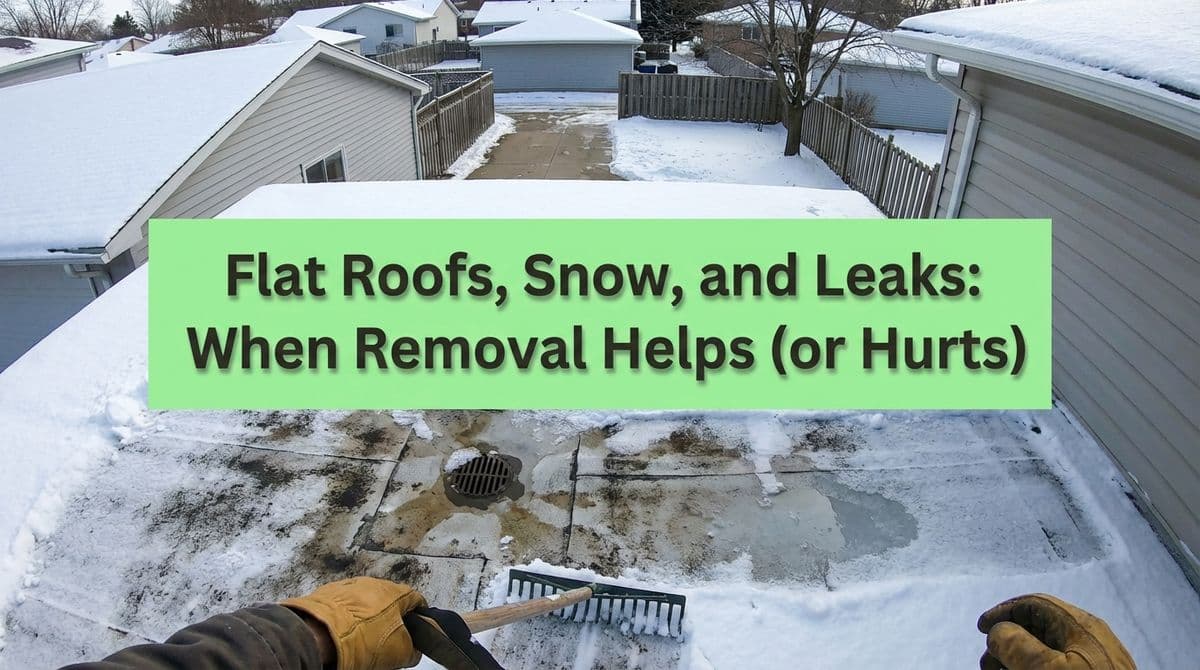
“Can You Get Snow Off My Flat Roof Today? It’s Leaking.”
We recently got a call from a customer — let’s call her Linda — at a commercial building we’d just cleared out after a storm. She asked if we could come back, but this time it wasn’t for plowing or shoveling.
“Do you guys do snow removal from flat roofs?” she asked. “The roof is leaking, and I’ve got roofers coming tomorrow, but it’s just coming through the roof right now.”
Right away, I had two questions for her: Is this a weight issue, or a leaking issue? And how fast do you need help? Snow on a flat roof can cause both structural stress and water problems, but ripping into it the wrong way can actually make the leaks worse. So we walked through what was happening and how to handle it safely.
Flat Roofs and Snow: Why Leaks Show Up After a Storm
Flat (or low-slope) roofs handle snow very differently than steep roofs. Instead of sliding off, snow tends to sit, melt slowly, and refreeze. That combination can cause problems like:
- Ponding water: Melted snow can form shallow puddles that slowly find seams, cracks, or tiny openings.
- Ice dams at drains: If roof drains, scuppers, or gutters freeze up, water backs up and can sneak under membranes or flashing.
- Hidden damage: Old patches, aging seams, or prior repairs are more likely to fail when they’re under the stress of wet, heavy snow.
In Linda’s case, the main concern was active leaking, not visible sagging or structural movement. That told us the roof itself was probably holding the load, but there was likely a weak spot being exposed by melting snow.
When Snow Removal Actually Helps a Leaking Flat Roof
Clearing snow from a flat roof can help reduce leaks, but only if it’s done thoughtfully. Here are situations where removal often makes sense:
- There’s a lot of wet, heavy snow and you’re worried about both leaks and load.
- Water is ponding in obvious low spots, and you can see it working toward seams or penetrations.
- Roof drains or scuppers are buried and water has nowhere to go when things start to melt.
- Roofers are scheduled soon, and you want to give them access to see what’s really going on.
For Linda, roofers were already booked for the next day. Light, careful snow removal to expose drains and relieve some of the load could buy her time and make it easier for the roofing crew to diagnose the problem.
How We Think About Safety Before Stepping on a Roof
Before we ever send a crew up, we ask a few key questions:
- Is there visible dipping, bowing, or cracking inside? If so, that’s a structural concern — call a roofer or engineer before anyone walks on it.
- What’s the roof surface? Rubber membrane, modified bitumen, stone ballast, coatings — each one needs a different touch.
- How deep is the snow? Knee-deep heavy snow means more risk for both the structure and our crew.
That’s why, on Linda’s call, I told her we needed to “plan it out to make sure our guys are safe and we’re not going to damage anything further.” Snow removal should never be a blind rush job.
When Snow Removal Can Make Roof Problems Worse
On the flip side, we’ve seen well-intentioned DIY snow removal cause more damage than the storm itself. Problems usually come from:
- Using metal shovels or ice choppers that slice into membranes or seams.
- Scraping down to the surface instead of leaving a protective layer of snow.
- Piling snow in one spot to “get it out of the way,” which adds dangerous point loads.
- Blocking drains with snow piles, trapping meltwater right where you don’t want it.
Remember: if your roof is already leaking, it likely has a weak point. Aggressive shoveling can turn one small leak into several new ones – or even shorten the life of the whole system.
Safer Flat Roof Snow Removal: Our General Approach
Every building is different, but in general we prefer to:
- Shovel in layers, taking off snow gradually instead of all at once.
- Use plastic shovels or pushers and leave a thin layer of snow to protect the membrane.
- Clear paths to drains and scuppers first so meltwater has an escape route.
- Spread removed snow evenly if we can’t throw it off the roof safely, to avoid overloading any one area.
We also coordinate with roofing contractors whenever possible, so we’re not working at cross-purposes with the repairs you’re about to invest in.
Flat Roof, Snow, and Leaks: Quick Homeowner FAQ
“The roof is leaking right now. Should I call a roofer or a snow removal company first?”
If you see active leaks, call a roofer first. While you’re on the phone, ask if they recommend snow removal to help them diagnose or relieve the issue. If they do, that’s when we come in to carefully clear areas and open up drainage.
“How much snow is too much on a flat roof?”
There’s no single number, because structures are designed differently. But if you’re seeing doors sticking, new ceiling cracks, or noticeable sagging, that’s a red flag for structural stress — get a professional opinion before anyone goes on the roof.
“Will insurance cover snow removal?”
Policies vary. Sometimes insurance will cover snow removal as part of preventing further damage during a claim; other times it’s considered maintenance. It’s worth a quick call to your agent when you notice leaks or excessive snow buildup.
When to Call Us About Snow on Your Flat Roof
If you’re staring at a flat roof full of snow and wondering what to do, here’s a simple checklist we walk through with customers like Linda:
- Yes, call us now if:
- You see water leaking and suspect snow is contributing.
- Drains, scuppers, or gutters are buried under snow and ice.
- You have roofers scheduled soon and want the surface cleared for inspection.
- Access is tricky or unsafe (multi-story, steep transitions, limited ladders).
- Pause and call a roofer/engineer first if:
- You see signs of structural stress (sagging, bowing, new cracks).
- Interior doors suddenly stick or won’t latch after a heavy snow.
- You hear unusual creaking or popping in ceilings or walls.
We’re always happy to talk through your specific situation before anyone sets foot on the roof. Sometimes the safest move is a careful snow removal plan. Other times, the best thing we can do for you is say, “Let the roofer look first,” so we don’t risk making a tricky leak even worse.
If you’re unsure what your flat roof needs after a storm, give us a call. We’ll ask the same questions we asked Linda — about leaks, weight, and timing — and help you decide on the safest, most sensible next step.