Who’s Responsible for Snow on Your Sidewalk?
Unsure who must clear sidewalk snow at your home? Here’s how responsibility, local laws, and smart planning help you avoid fines and slip-and-fall headaches.
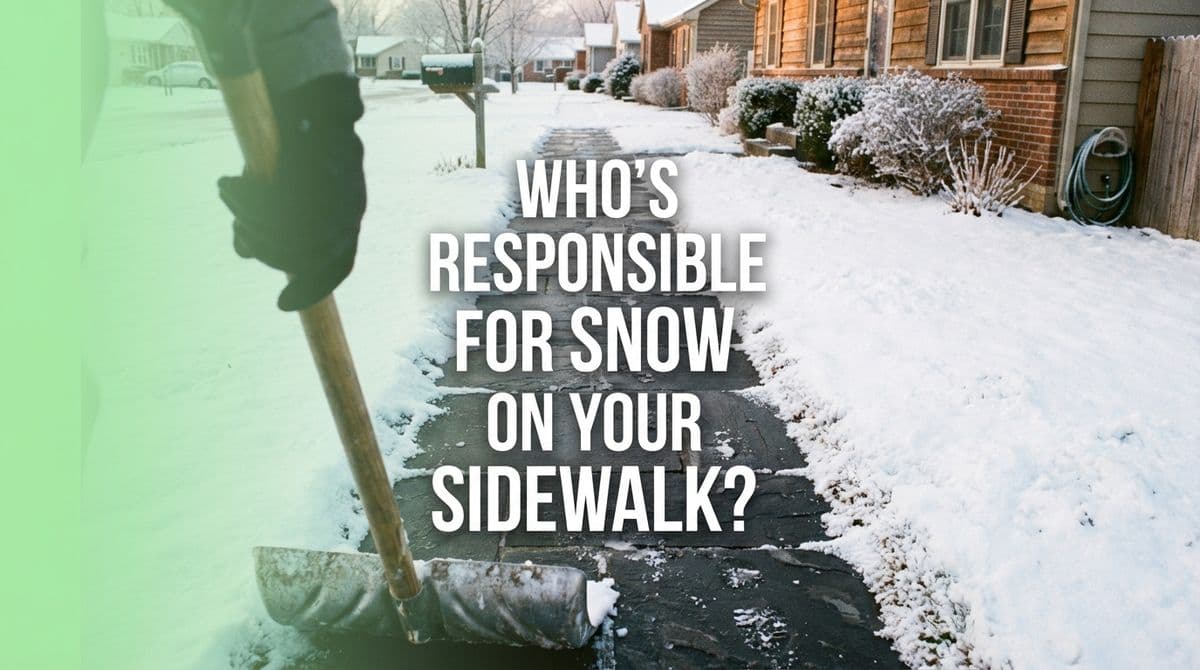
We got a call about “just the driveway”… at first
We recently got a call from a customer — let’s call her Emily — who was moving into a new home right before a big storm. She wanted to get on our snow removal list and asked if we could take care of “really just the driveway.”
As we talked, I asked a question we ask almost every new snow client: “Do you want us to handle the sidewalk too?” At first, Emily said she didn’t really think there was a sidewalk that needed clearing — just some steps and a landing up to the house.
But this particular property sits right on a main road in front of a park, and we already service a few homes on that block. I knew there was a public sidewalk running along the street. So I mentioned, as gently as I could, that the sidewalk along the road was probably her responsibility — and that the township could give her a hard time if it stayed buried in snow.
Driveways vs. sidewalks: what are you actually responsible for?
Conversations like this happen a lot, especially when someone is new to a home or area. Most homeowners assume they’re responsible for their driveway and paths leading to their doors. That part’s usually clear.
The confusing part is the public sidewalk that runs along the street. Even though it’s used by the public and often technically sits in the right-of-way, many towns and cities put the responsibility to clear it on the adjacent homeowner or business.
That’s exactly what was going on with Emily’s new place. The sidewalk along the main road wasn’t on her radar at all — she was thinking only about the private areas she and her family used. But legally, ignoring that public sidewalk could mean fines or, worse, liability if someone slipped.
Why sidewalks matter so much to local officials
When we told Emily that the sidewalk on the street side was likely her responsibility, she immediately said, “Oh, then we can do that too — I don’t want to get in trouble.” And she’s right to think that way.
Many municipalities have specific rules about:
- How soon after the snow stops you must clear sidewalks (often 12–24 hours).
- How wide the path needs to be (commonly at least 3 feet).
- Whether you’re allowed to use salt or only sand in certain areas.
- Penalties for not shoveling — which can range from warnings to recurring fines.
Local officials focus on sidewalks because they’re thinking about pedestrian safety: kids walking to school, neighbors out with dogs, or people catching the bus. An icy stretch in front of a single house can cause real injuries — and those injuries can come back to the property owner, not just the town.
How snow and ice affect your legal liability
We’re landscapers, not lawyers, but we see the same pattern every winter. If a sidewalk or walkway is obviously neglected after a storm, and someone slips, the homeowner may be exposed to premises liability claims.
That’s a big reason we always ask new clients what areas they want covered. In Emily’s case, she originally requested only the driveway. Once we explained the sidewalk issue, she quickly updated it to driveway and sidewalk. She didn’t want her family or a passerby getting hurt — and she definitely didn’t want a letter from the township.
Even if you plan to handle snow yourself, it’s worth thinking through:
- Are there any public-facing sidewalks along a main road?
- Do your steps and landings get very icy or shaded?
- Could a delivery driver, mail carrier, or guest reasonably slip there?
If the answer is yes, those areas deserve priority when you’re clearing snow.
Setting a snow threshold: when should clearing start?
Another detail Emily brought up was how much snow should fall before we come out. At her current house, her service came whenever it was “shovelable.” That’s pretty much what we recommend too.
For her new home, we agreed on a 2-inch threshold. That means we’ll come out once there’s about two inches of accumulation — not for every dusting or flurry, but definitely for anything that requires real shoveling or plowing.
That kind of threshold gives you a good balance:
- You’re not overpaying for constant visits during light flurries.
- You’re still getting service before snow gets packed down, icy, and dangerous.
Service timing when you’re not living at the property yet
Because Emily and her family were still in the process of moving, they weren’t staying at the new house full-time. So we set her up with our most common option for that situation: service after the snowfall stops.
Here’s how we typically structure a snow-removal plan for local homeowners:
- Trigger amount: Usually 2 inches, but we can go lower for seniors or steeper driveways.
- Timing: Either after the storm ends, or for some clients, repeated visits during long storms so they can get out for work or medical shifts.
- Areas covered: Driveway, public sidewalk along the street, front walk, steps/landing, and often a path to trash cans or side doors.
For someone like Emily, who doesn’t need to leave the house during the storm, “after it stops” is usually the most cost-effective choice. Once she moves in permanently, she plans to switch to a plan with more frequent passes during larger storms so her family can come and go safely.
Simple steps to stay safe and avoid headaches
If you’re unsure what you’re responsible for, here’s a quick checklist you can use before the next storm hits:
- Check your local rules. A quick look at your town or township website under “snow removal” or “sidewalks” usually spells out your obligations.
- Walk your property line. Look for any public sidewalks along the street, paths to your doors, and any steps or landings visitors use.
- Decide your threshold. Think about how much snow you can realistically handle yourself and when you’d want help.
- Make a plan. Whether it’s hiring a service, enlisting a neighbor, or setting aside time and tools, know who is clearing what, and when.
When we set up a new client, we walk through each of these points so nothing falls through the cracks. On a corner lot, for example, we’ll specify that we’re clearing both street-facing sidewalks, the driveway, the main front walk, and the front steps. For a smaller property on a busy road, we might focus on the driveway, the public sidewalk, and a single clear path from the driveway to the front door so delivery drivers and guests have a safe route.
At the end of the day, the goal is simple: keep people safe, stay on the right side of local rules, and save your back (and snow blower) from doing more than it should. If you’re ever unsure which parts of your property you’re responsible for, or how to structure a snow plan that fits your life, we’re always happy to talk it through and help you figure out the best approach.