Caring for a Vacant Property: Lawn, Snow & Overgrowth Tips
Looking after a vacant home? Here’s how we manage lawn care, snow removal, and overgrowth control so your empty property stays safe, tidy, and compliant.
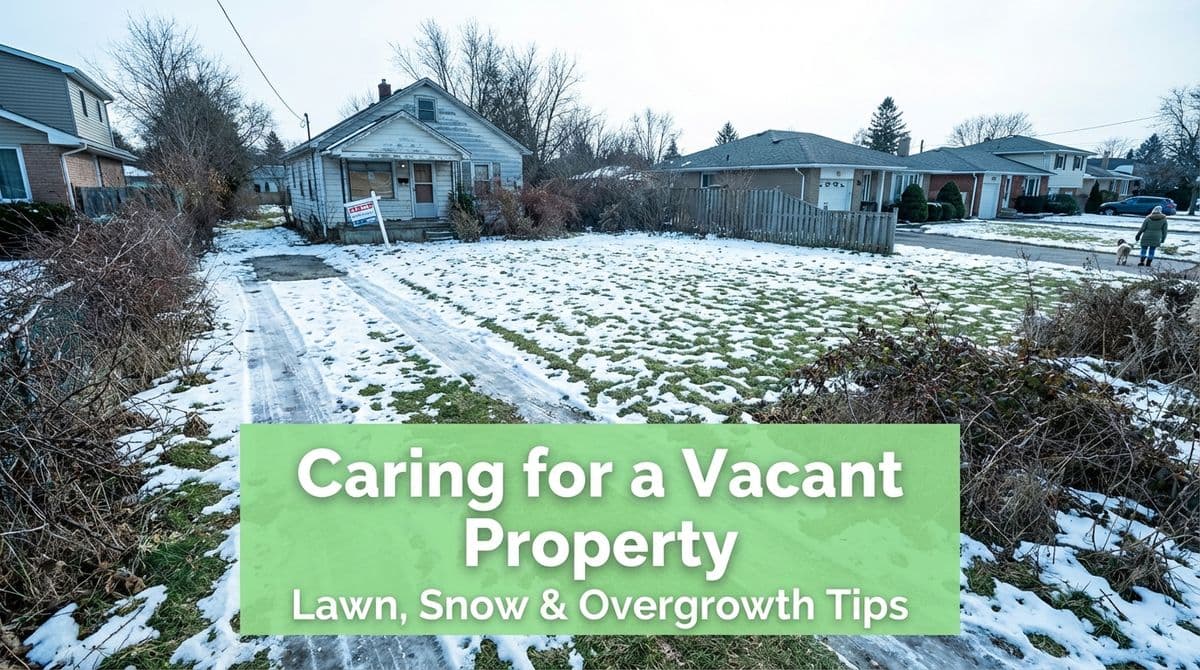
When No One Lives There, But The Property Still Needs Care
We recently got a call from a customer — let's call her Janet — who lives several states away but is responsible for her uncle’s home here in town. He doesn’t live in the house anymore, but the mail still comes, the sidewalks still need to be cleared, and the lawn… well, it doesn’t stop growing just because the house is empty.
Janet told us her uncle used to have a neighbor and a church friend who handled grass cutting and snow removal. Over time, those favors stopped, and now she only gets to the property once or twice a year. She’d noticed “stuff hanging on the fence” on the online street view and wasn’t even sure what it was or whether the fence needed to be removed.
If that sounds familiar, you’re not alone. Vacant or semi-vacant properties can quickly become an eyesore — and a liability — if they’re not maintained. Let me walk you through how we think about lawn care, snow removal, and overgrowth control for a home that no one is living in.
Why Vacant Homes Still Need Regular Outdoor Maintenance
From the outside, strangers can’t tell whether a house is vacant, only that it looks neglected. That can lead to a few issues:
- Code violations: Many towns require grass to stay under a certain height and sidewalks to be cleared after snow.
- Liability risks: Uncleared snow or broken branches on sidewalks can lead to slip-and-fall injuries.
- Security concerns: An overgrown, unmaintained property often looks like an easy target for trespassing or vandalism.
- Property damage: Vines and overgrowth on fences, sheds, and even siding can cause real structural damage.
When we visit a vacant property for the first time, like Janet’s uncle’s house, we don’t just look at the grass. We walk the whole perimeter and make notes on everything an out-of-town owner might miss: overgrowth on fences, low branches, drainage issues, and access to the mail and walkways.
Setting Up a Lawn Care Plan for a Vacant Home
For vacant properties, a simple “mow when needed” approach isn’t enough, because the owner usually isn’t there to see when it’s getting out of hand. Instead, we recommend a set schedule based on the growing season in our area.
For most of our customers in this situation, we suggest:
- Spring–early fall: Weekly or biweekly mowing, edging sidewalks and driveways, and trimming around fences and mailboxes.
- Late fall: Final mow a bit shorter than usual plus basic leaf cleanup to prevent soggy, matted turf.
- Off-season checks: Occasional site visits to make sure nothing is wildly overgrown or damaged.
For remote owners, clear communication is key. Like Janet requested, we typically:
- Email a quote and outline of services before we start.
- Include photos of the yard so you can see exactly what we’re looking at.
- Flag any recommended extras (such as weed treatments or tree trimming) separately so you can approve them.
Snow Removal When You’re Not Around
Janet also needed reliable snow removal because mail still gets delivered to the house. That’s a common situation: the home is empty, but the sidewalk is still the owner’s responsibility.
Here’s how we typically handle snow for vacant homes:
- Automatic service after storms: We add the property to our route so you don’t have to call each time it snows.
- Priority areas: We focus on public sidewalks, the main walkway to the front door, and any areas required by local ordinances.
- Ice control: When appropriate, we apply salt or ice melt on walks and steps to reduce slip hazards.
When setting up snow service, ask your contractor (or check yourself) about:
- Local rules: How quickly sidewalks must be cleared after a storm.
- Access points: Which doors need to be accessible for mail, inspections, or emergencies.
- Communication: Whether you’ll get confirmation or photos after major storms.
Dealing With Overgrowth and “Stuff Hanging on the Fence”
One of Janet’s biggest worries was the mystery growth on her uncle’s fence. From online images, all she could see was a tangle of something hanging off it, but she didn’t know if it was harmless or damaging.
We see this all the time. Common culprits include:
- Fast-growing vines like wild grape, Virginia creeper, or invasive species.
- Volunteer shrubs or saplings that sprout along fence lines.
- Weedy brush that creeps in from neighboring lots or alleys.
Why this matters for a vacant home:
- Vines can pull on fence panels and trap moisture, leading to rot or rust.
- Overgrowth can block visibility and make the property feel abandoned.
- Some plants may be poison ivy or thorny species, creating hazards for mail carriers and anyone else on the property.
What We Do During an Overgrowth Inspection
When we visit a property like Janet’s, we typically:
- Identify what’s growing on fences, around sheds, and along property lines.
- Assess the impact on structures — is it cosmetic, or is it damaging wood, metal, or masonry?
- Recommend options in writing: simple trimming, full removal of vines, or, in extreme cases, replacing a failing fence.
- Provide before-and-after photos so the remote owner can see exactly what was done.
If you’re managing a vacant property from a distance, ask your landscaper to include this type of inspection and to note whether anything poses a risk to the fence, siding, or walkways.
Practical Tips for Remote Property Owners
If you’re in Janet’s shoes — responsible for a home you rarely visit — here are a few ways to make outdoor maintenance smoother:
- Set up predictable service: Choose a regular mowing schedule and automatic snow removal so nothing gets missed.
- Ask for photos: Request periodic photo updates of the yard, fence lines, and entrances.
- Bundle tasks: Combine lawn care, snow removal, and overgrowth control with one provider, if possible.
- Share your priorities: Let your contractor know about mail delivery, inspections, or neighbors who may use the sidewalk frequently.
- Review once or twice a year: Have a more detailed walkthrough yearly to catch bigger issues early.
Vacant homes don’t have to look abandoned. With a clear plan for lawn care, snow removal, and overgrowth control — and a local team you trust to keep an eye on things — you can protect the property, stay compliant with local rules, and keep the place looking cared for until you decide what’s next for the house.